

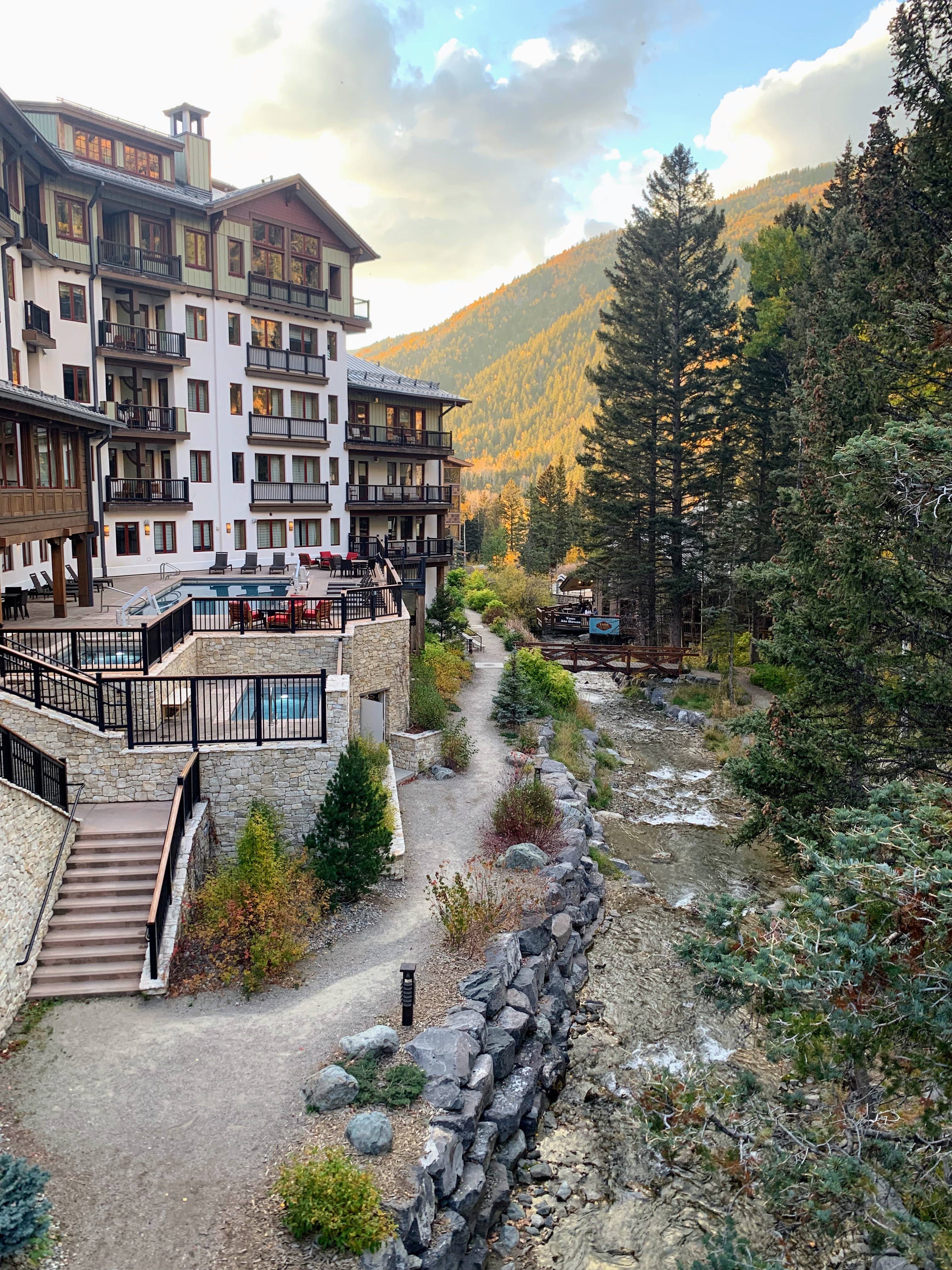
When you think of the Southwest, what do you think of?
Let me guess – wide, sandy expanses, punctuated by cacti and scrubby bushes. Rattlesnakes and scorpions and scorching desert sun.
I know that’s what I thought of the Southwest before moving here – and it’s certainly what most of my friends and family think too, based on over a dozen conversations since I moved to New Mexico.
But the Southwest is not monolithic. And in fact, that picture I painted is more accurate to the state of Arizona or parts of Texas – less so in mountainous New Mexico.
When I was searching for a place to settle down, I had a few requirements. I wanted somewhere without an exorbitant cost of living, weed needed to be legal, and I wanted to be close to incredible outdoor areas. New Mexico ticked all of these boxes. My husband also had a few requests – mainly that we didn’t move somewhere with oppressive summer heat. And (perhaps surprisingly) New Mexico ticked that box too.
See, the thing that most people don’t know about this state – and what I didn’t know until I started researching it – is that New Mexico is at elevation. The lowest point in this state is at 2,800 ft above sea level and the highest point is over 13,000 feet. Yes, it’s a desert landscape down here, but it’s a mountainous desert, with soaring hills, jagged peaks, and all four seasons.
Yes, winter is alive and well in New Mexico, a fact that I continually surprise my loved ones with. I’ve lost count of how many conversations I’ve had in the past month that go like this:
“We want to come visit you! How’s January?”
“That sounds amazing! We’d love to have you – but just so you know, it won’t be any warmer down here than in Upstate New York. It might actually even be colder!”
“Oh… really? Does it snow there?”
“Yes! Taos is at nearly 7,000 ft and just 45 minutes away from two incredible ski mountains in the Rockies.”
“Oh… well when does it get warm?”
When you live in the wet and frigid northeast, it’s easy to assume that the rest of the country is warmer than you are in mid-winter. But as I discovered in my travels, there is no monopoly on cold winter weather in any part of the country.
Despite the images that come to mind when you say Mexico, New Mexico is not a year-round warm weather destination. And while temperatures do reach over 100F in the summer in Albuquerque and Santa Fe, the weather is more mild in Taos and it regularly drops below freezing between October and March.
Albuquerque is at 5,000 ft and as I’ve heard from locals, will get snow from time to time in the winter. Given the strength of the sun, it doesn’t last long, but it’s not unusual to wake up to a dusting of fine powder. Santa Fe sits even higher in elevation than Taos does, at 7,100 ft – and is home to a (reportedly) incredible ski area. (Yes, that makes Santa Fe even higher in elevation than Denver, the “mile-high” city.)
I am so excited for my first winter in New Mexico, to watch how the seasons change the view through my window and to ski new slopes in the Rockies. And while I welcome friends and family year-round, I certainly understand the desire to wait until it’s warmer than home to visit.
None of this is to say that there’s no classic desert landscape here – over a third of the state is considered Great Plains and Colorado Plateau, both of which are open expanses with limited wildlife. But New Mexico and its diverse geography are often left out of the conversation about the Southwest, which leads to a fundamental misunderstanding of this region.
I did not move to the low desert – I moved to the Rocky Mountains. The Mesa stretches for miles on the west side of town but I live near the base of the mountains and Pueblo Peak fills my view to the north.
In truth, the misunderstandings about this state are part of the reason I love it – it continually surprises people to hear that New Mexico is so high above sea level. In contrast, the lowest point in Arizona is just 78 ft above sea level, and Phoenix, which is most people’s main point of reference for the Southwest, sits at just 1,000 ft above sea level. But Arizona has its mountains too – the highest point in the state is over 12,000 ft.
This morning on my drive down to Santa Fe, I watched a storm rage over the Rockies to the East, dumping snow on the highest peaks. Earlier this week I lit the gas stove for the first time to warm the house as nighttime temperatures dropped below 39F.
Winter is coming to New Mexico and I can’t wait.


